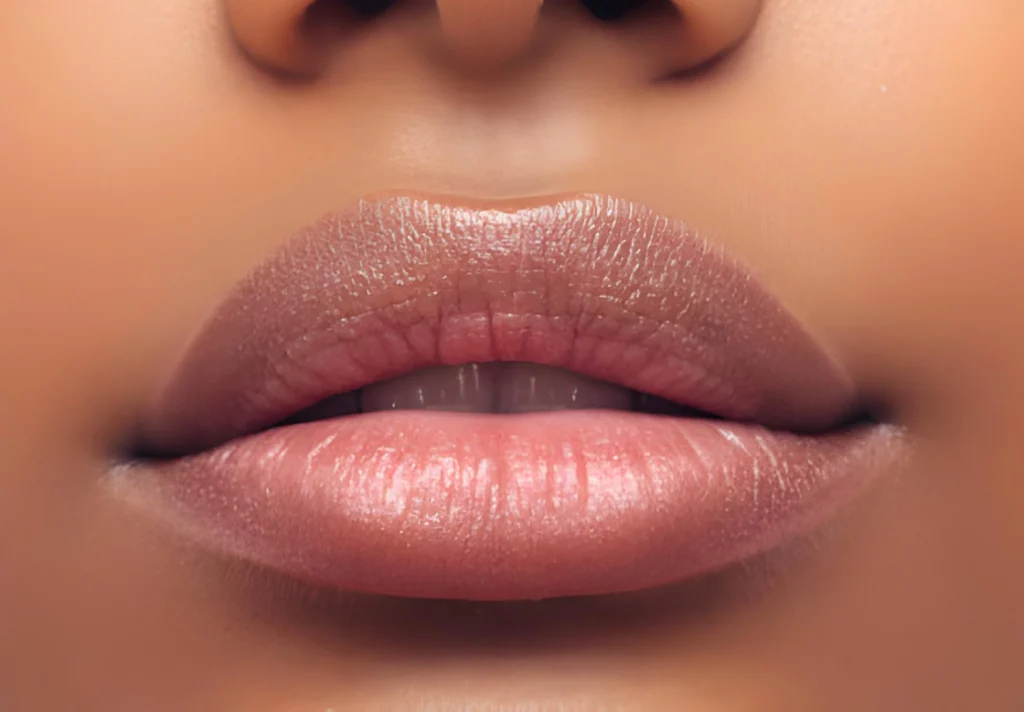
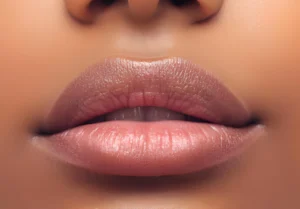
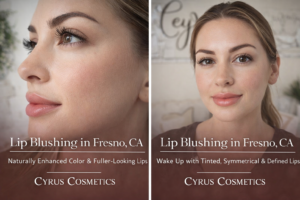



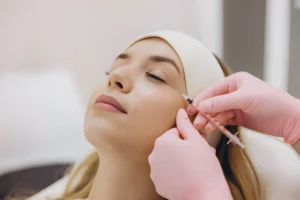
Lip blushing pros and cons are important to understand before booking a semi-permanent cosmetic tattoo. Lip blushing is designed to enhance the natural color, shape, and symmetry of the lips using soft, organic pigments that create a subtle, natural-looking tint.
Unlike older-style lip tattooing that often created harsh outlines, modern lip blushing focuses on a blended result that mimics a healthy flush. Results typically last 1–3 years, fading gradually over time based on lifestyle, skin type, pigment selection, and aftercare compliance.
What Is Lip Blushing
Lip blushing is a semi-permanent cosmetic tattoo technique that deposits pigment into the lip tissue to enhance natural tone and refine shape. The objective is a soft, even tint rather than a bold lipstick effect, which makes it a preferred option for clients who want a low-maintenance, natural enhancement.
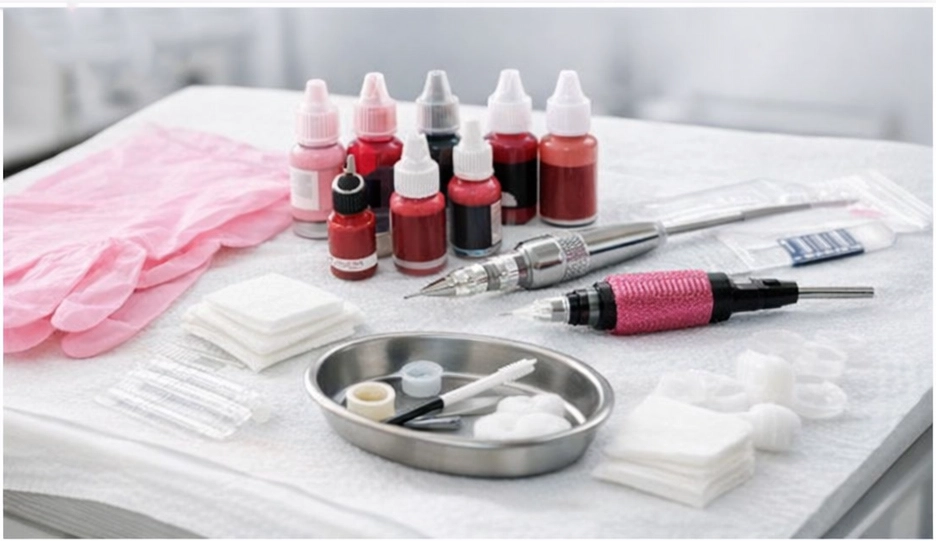
In practice, the final aesthetic is influenced by your starting lip tone, undertone, skin sensitivity, technique, pigment choice, and the quality of aftercare. A thorough consultation is where expectations are aligned and the plan is customized.
Benefits of Lip Blushing
One of the most valued benefits is restoring color to lips that appear pale or uneven. Many clients experience pigment loss over time due to sun exposure, aging, smoking, dehydration patterns, or genetics. Lip blushing can improve symmetry, define the lip border, and create a more balanced look.
Enhanced definition and improved symmetry, with a natural tint that does not look heavy or overdone.
Wake up with a soft, polished lip tone, reducing reliance on daily lipstick or liner.
Creates the appearance of fuller lips through better border definition, without adding volume like filler.
Can help camouflage certain uneven tones and minor scarring for a more uniform finish.
Ultimately, lip blushing is attractive for clients seeking a long-lasting, low-maintenance enhancement that supports confidence and simplifies daily routines.
Risks and Disadvantages
Lip blushing is generally considered safe when performed by a trained professional using quality pigments and sterile technique. However, it is not risk-free. Understanding realistic risks improves decision-making and supports better outcomes.
- Expected healing effects: temporary swelling, redness, tenderness, and mild sensitivity.
- Dryness and flaking: some clients experience prolonged dryness during healing.
- Uneven pigment: improper technique or poor aftercare can lead to patchiness or early fading.
- Allergic reactions: rare, but possible, especially with pigment or topical products.
- Cold sore activation: clients with a history of herpes simplex may trigger an outbreak without preventive medication.
Risk reduction is primarily driven by provider skill, consultation quality, sterile execution, and strict aftercare adherence. If you are exploring options, review available services here: https://cyruscosmeticsfresno.net/our-services/.
What to Expect, Healing and Touch-Up
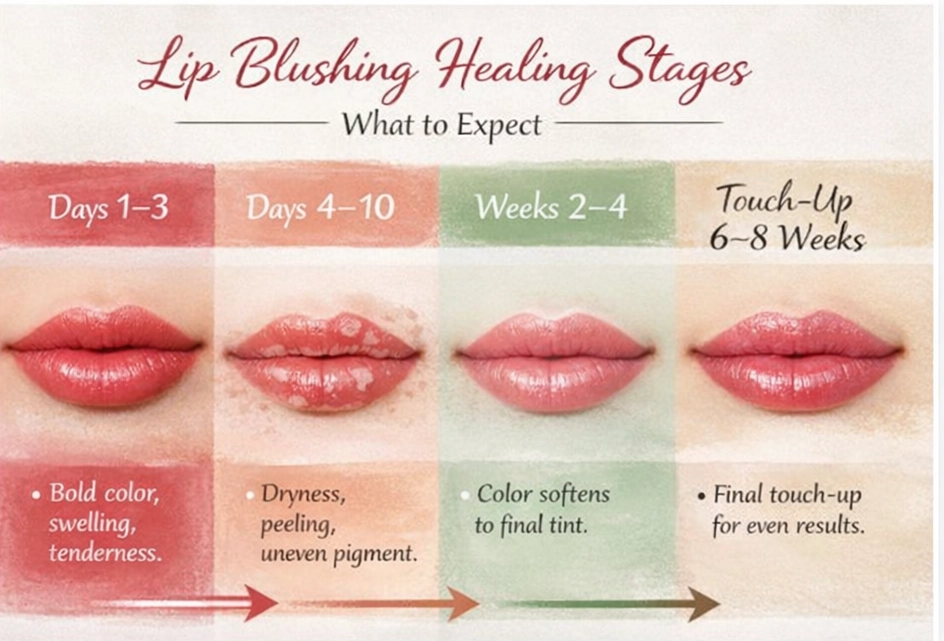
Lip blushing results are not immediate. Lips typically appear darker and more intense during the first week, then soften as healing progresses. Understanding this timeline helps set proper expectations and prevents unnecessary concern.
- Days 1–3: color looks bold and lips may feel swollen or tender.
- Days 4–10: dryness and flaking are common, pigment may appear uneven temporarily.
- Weeks 2–4: color stabilizes and gradually softens into a more natural tone.
- Touch-up (6–8 weeks): many clients need a refinement session for optimal evenness and longevity.
Is Lip Blushing Right for You
Lip blushing is ideal for clients who want subtle enhancement rather than bold makeup. It can be a strong fit for individuals seeking a consistent everyday lip tone, improved symmetry, and a refined look with minimal daily effort.
However, it may not be appropriate for individuals with certain medical conditions, active skin infections, or unrealistic expectations regarding final shade or “instant” results. A consultation is essential to confirm candidacy, discuss pigment selection, review aftercare requirements, and establish a risk-reduction plan.
When performed correctly, lip blushing can be a high-satisfaction, confidence-boosting service that enhances natural features while supporting a long-lasting, low-maintenance beauty routine.
FAQs
How long does lip blushing last? ›
Most results last 1–3 years, gradually fading over time. Longevity varies based on lifestyle, skin type, pigment selection, and aftercare.
Is lip blushing painful? ›
Discomfort varies by individual. Many providers use topical numbing to improve comfort, though mild sensitivity is still common.
Do I need a touch-up? ›
Many clients benefit from a touch-up session 6–8 weeks after the initial appointment to refine tone, evenness, and retention.
Can lip blushing trigger cold sores? ›
Yes, the procedure can trigger outbreaks in clients with a history of herpes simplex. Preventive medication may be recommended prior to treatment.
How do I reduce risk and improve results? ›
Choose a trained professional, follow aftercare precisely, and disclose medical history and medications during consultation.
Explore Your Options and Book a Consultation
Interested in lip blushing? Review our services and schedule a consultation to confirm candidacy, align expectations, and create a plan designed for natural-looking results.
