





What if the future of hair restoration involved more than slowing hair loss or transplanting follicles? What if a topical treatment could help reactivate dormant hair follicles and encourage hair growth again?
That possibility is attracting attention around PP405 hair growth treatment research. PP405 is an investigational topical drug being developed by Pelage Pharmaceuticals to address androgenetic alopecia, commonly known as male- and female-pattern hair loss.
Unlike established treatments that influence hair growth through other pathways, PP405 is designed to target metabolic activity within existing hair follicle stem cells.
For patients exploring hair restoration in Fresno, California, understanding this emerging research can provide insight into where regenerative dermatology and medical aesthetics may be heading.
Investigational Drug
PP405 is being studied in clinical trials and is not an FDA-approved hair-loss treatment.
Novel Mechanism
It targets the mitochondrial pyruvate carrier to influence hair follicle stem-cell metabolism.
Early Clinical Findings
Company-reported Phase 2a findings suggest potential activity, but larger trials are needed.
What Is PP405 Hair Growth Treatment?
PP405 is an experimental topical small-molecule drug being developed for androgenetic alopecia, a common form of progressive hair thinning affecting both men and women.
The treatment is being investigated for its ability to influence biological processes associated with dormant hair follicle stem cells.
Rather than introducing new follicles through transplantation, the research focuses on whether existing follicles can be encouraged to resume productive hair growth.
Key distinction: PP405 is not a stem-cell transplant, a cosmetic hair serum, or an approved regenerative treatment. It is an investigational drug intended to influence the activity of existing follicle stem cells.
How Does PP405 Work for Hair Growth?
Hair follicles naturally cycle through periods of growth, transition, and rest. Hair follicle stem cells help regulate these cycles.
PP405 is designed to inhibit the mitochondrial pyruvate carrier (MPC), a component involved in cellular energy metabolism.
By influencing how hair follicle stem cells use energy, researchers hope to encourage certain dormant cells to become active and support renewed hair growth.
Follicle Stem Cells
These cells participate in normal hair cycling and can remain present even when visible hair growth has declined.
Metabolic Targeting
PP405 is designed to alter a specific metabolic pathway associated with follicle stem-cell activity.
Potential Reactivation
The goal is to encourage suitable dormant follicles to re-enter productive growth activity.
Individual Variation
Follicle preservation, hair-loss duration, and individual biology may influence future treatment responses.
This mechanism is scientifically interesting, but it does not establish that PP405 can restore hair in every bald area. Follicles that are permanently damaged or absent may not respond in the same way as dormant but viable follicles.
PP405 Clinical Trial Results: What Do We Know?
The early human research has generated interest in PP405. According to results announced by Pelage Pharmaceuticals in June 2025, a Phase 2a study enrolled 78 men and women with androgenetic alopecia.
Participants received topical PP405 or placebo during an initial four-week treatment period, followed by additional observation.
The company reported that the study met its primary safety endpoint and that the drug was generally well tolerated during the observation period.
Pelage also reported that no measurable systemic absorption was detected in participants' blood under the study's testing conditions.
Evidence context: These findings are based on company-reported early clinical results. They should not be interpreted as definitive proof of effectiveness or long-term safety.
Understanding the Reported 31% Hair-Density Finding
One of the most discussed findings involved a subgroup of men with more advanced hair loss.
According to the company's announcement, approximately 31% of PP405-treated participants in this subgroup experienced a greater than 20% increase in hair density at week eight, compared with 0% in the corresponding placebo group.
Although encouraging, the result requires careful interpretation.
- The figure came from a subgroup rather than the entire study population.
- The number of participants in the subgroup affects statistical confidence.
- The study primarily evaluated safety.
- The observation period was relatively short.
- Long-term durability remains uncertain.
- Larger trials must determine whether the findings can be reproduced.
What 31% does not mean: It does not mean every patient will regrow 31% more hair. It refers to the proportion of participants within a reported subgroup who crossed a particular hair-density improvement threshold.
Is PP405 Safe and FDA-Approved?
As of October 2026, PP405 remains an investigational drug and is not FDA-approved for treating hair loss.
The early Phase 2a safety findings are encouraging, but additional research is required to evaluate longer-term exposure, adverse effects, treatment duration, and the relationship between continued use and hair-growth outcomes.
The absence of measurable systemic absorption in an early study does not establish that systemic exposure is impossible under all conditions.
Patients should avoid purchasing products marketed as PP405 through unverified sellers or assuming that a product with similar claims contains the investigational drug used in clinical trials.
Patient safety: PP405 is not currently an established treatment option at Cyrus Cosmetics. Its eventual availability will depend on clinical trial results, regulatory review, and any future approval.
Why PP405 Could Matter for Medical Aesthetics
Hair loss can influence appearance, confidence, and quality of life. Patients increasingly seek non-surgical treatment options that may improve hair density without transplantation.
If PP405 demonstrates meaningful efficacy in larger trials and eventually receives regulatory approval, it could expand the range of hair-restoration options available to appropriately selected patients.
A New Direction in Regenerative Hair Restoration
PP405 represents an approach focused on influencing existing hair follicle stem-cell activity through metabolic pathways. This differs from physically transplanting follicles.
However, the term "regenerative" should not be interpreted as evidence that PP405 creates new follicles or guarantees restoration of previously lost hair.
Potential for Non-Surgical Care
A topical treatment with demonstrated clinical benefit could appeal to people seeking alternatives or complements to existing hair-loss interventions.
Its ultimate role would depend on the approved indication, treatment effectiveness, safety profile, cost, and comparison with established options.
Could PP405 Help Women Experiencing Hair Thinning?
Female-pattern hair loss can be emotionally challenging and may involve several contributing factors.
The Phase 2a PP405 study included both men and women, making its development relevant to researchers interested in treatment options across sexes.
However, early trial findings do not establish that PP405 is equally effective for men and women.
Larger studies will be needed to determine treatment response, appropriate patient selection, and safety in different populations.
Clinical consideration: Hair thinning in women should not automatically be assumed to be androgenetic alopecia. Nutritional, hormonal, inflammatory, medication-related, and other medical factors may require evaluation.
Could PP405 Complement Other Hair Restoration Treatments?
If PP405 eventually receives regulatory approval, clinicians may investigate whether it can be safely incorporated into comprehensive hair-restoration programs.
Such programs may include appropriate diagnostic evaluation, scalp-health assessment, established medical therapies, and objective monitoring of hair density.
However, combining PP405 with other treatments should not be assumed to produce better results automatically.
Future research would need to establish the safety, compatibility, and added benefit of any proposed combination.
PP405 vs. Existing Hair Loss Treatments
PP405 is being developed through a different biological pathway from several established approaches to androgenetic alopecia.
| Treatment | General Approach | Current Status |
|---|---|---|
| PP405 | Investigational inhibition of mitochondrial pyruvate carrier activity to influence follicle stem-cell metabolism. | Investigational; not FDA-approved for hair loss. |
| Topical Minoxidil | Supports hair growth through mechanisms associated with follicle activity and the hair-growth cycle. | FDA-approved topical formulations for specified hair-loss indications. |
| Finasteride | Reduces conversion of testosterone to dihydrotestosterone through 5-alpha-reductase inhibition. | FDA-approved oral treatment for male-pattern hair loss. |
| Hair Transplantation | Surgically relocates hair follicles from donor areas to areas of thinning. | Established surgical procedure for selected candidates. |
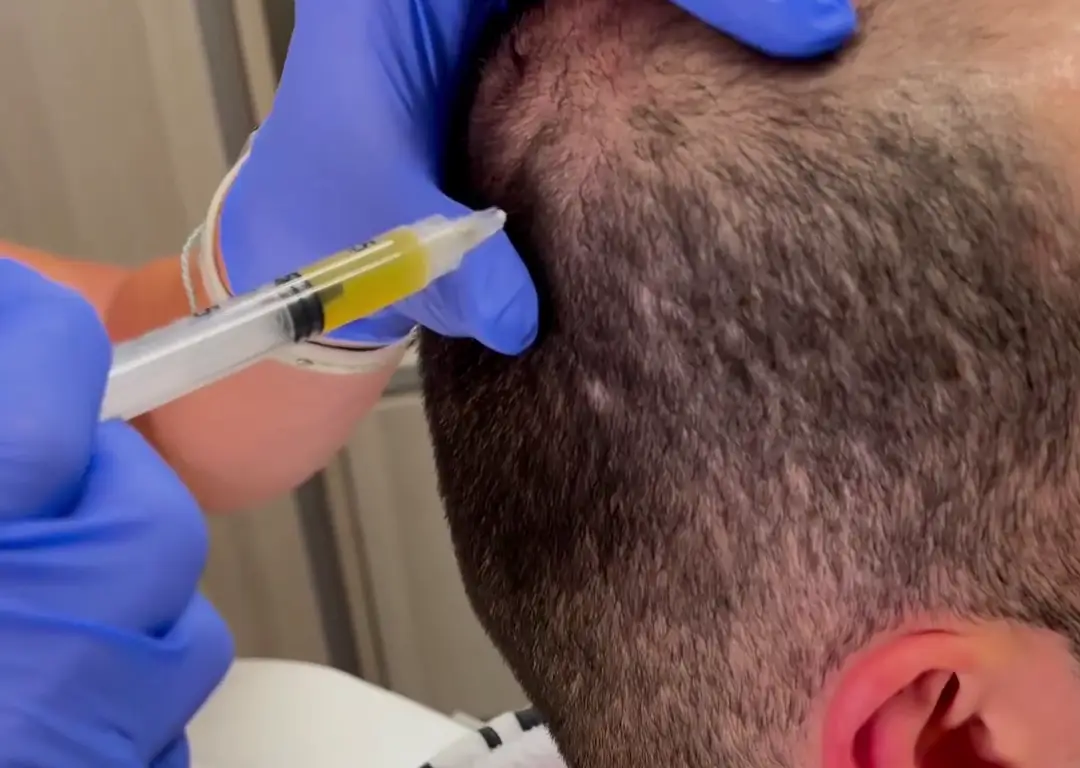
| PRP Hair Treatment | Uses platelet-rich plasma prepared from the patient's blood. | Used in some clinical settings; evidence and protocols vary, and it is not an FDA-approved drug treatment for hair loss. |
These approaches are not interchangeable. Treatment selection depends on the diagnosis, patient characteristics, safety considerations, available evidence, and professional evaluation.
What Happens Next in PP405 Research?
According to the October 2026 development update described in the company's reporting, Pelage Pharmaceuticals announced the first participant had been dosed in its Phase 2/3 AWAKEN trial on October 14, 2026.
This next stage is intended to provide more rigorous evidence regarding efficacy and safety in people with androgenetic alopecia.
Several questions remain important:
- How consistently does PP405 improve hair density?
- Which patients respond best?
- How long must treatment continue?
- Do results persist after treatment stops?
- What adverse effects emerge with longer use?
- How does PP405 compare with established treatments?
- Will clinical outcomes differ between men and women?
The answers will determine whether PP405 becomes an important new hair-restoration treatment or remains an interesting scientific development with more limited clinical applications.
Hair Restoration and Regenerative Aesthetics in Fresno, CA
At Cyrus Cosmetics in Fresno, California, staying informed about emerging aesthetic and regenerative technologies helps support thoughtful conversations about treatment options and patient expectations.
PP405 represents an interesting area of hair-growth research, but it is not currently an approved treatment or a service offered at Cyrus Cosmetics.
Individuals experiencing hair thinning should seek an appropriate evaluation to understand the potential causes and discuss established treatment options.
Explore our aesthetic and wellness services in Fresno to learn more about Cyrus Cosmetics.
Final Perspective: Is PP405 the Future of Hair Restoration?
PP405 is an intriguing development in hair-restoration research because it explores a biological pathway involving hair follicle stem-cell metabolism.
Early company-reported findings suggest potential activity, but larger and longer clinical trials are essential before its benefits, risks, and clinical role can be established.
For now, PP405 is best understood as a promising investigational hair-growth drug rather than a proven breakthrough.
The future of hair restoration may include increasingly targeted therapies, but evidence, patient safety, and realistic expectations must remain central to care.
Frequently Asked Questions About PP405
What is PP405?
PP405 is an investigational topical drug being developed for androgenetic alopecia. It is designed to influence hair follicle stem-cell metabolism through inhibition of the mitochondrial pyruvate carrier.
Is PP405 FDA-approved?
No. As of October 2026, PP405 remains investigational and is not FDA-approved for treating hair loss.
Does PP405 regrow hair?
Early company-reported clinical findings suggest potential hair-growth activity, but larger trials are required to determine effectiveness, durability, and which patients may benefit.
How does PP405 work?
PP405 is designed to inhibit the mitochondrial pyruvate carrier, influencing metabolic processes associated with hair follicle stem-cell activity.
What does the reported 31% result mean?
The company reported that 31% of participants in a particular treated subgroup achieved a hair-density increase greater than 20% at week eight. This does not mean every patient regrew 31% more hair.
Can PP405 treat female-pattern hair loss?
Women were included in early clinical research, but more evidence is needed to establish efficacy and safety in women and determine appropriate treatment recommendations.
Is PP405 available at medical spas?
PP405 is investigational and is not an established, FDA-approved medical-spa treatment. It is not currently offered at Cyrus Cosmetics.
Can PP405 be combined with minoxidil or PRP?
The safety and effectiveness of combining PP405 with other hair-loss treatments have not been established. Any future combination would require appropriate clinical evidence and professional guidance.
Where can I learn about hair restoration in Fresno?
Cyrus Cosmetics provides aesthetic and wellness services in Fresno, California. Individuals concerned about hair loss should seek an appropriate clinical evaluation to discuss established options and determine whether additional specialist care is needed.
Medical and research disclaimer: This article is intended for general educational purposes and does not constitute medical advice. PP405 is an investigational drug and is not FDA-approved for hair loss. Early clinical findings may change as additional research becomes available. Cyrus Cosmetics does not offer PP405 treatment.
Explore Your Hair and Aesthetic Wellness Options
Interested in learning more about hair health, regenerative aesthetics, and available wellness services? Cyrus Cosmetics is here to help you explore informed options aligned with your goals.
